Explore Our Departments
Musculoskeletal & Orthopaedic Physiotherapy
Department Overview
Movement is central to everyday function, and the Department of Musculoskeletal & Orthopaedic
Physiotherapy builds its academic and clinical learning around this principle. The department covers conditionsinvolving the spine, joints, muscles, tendons, ligaments and soft tissues, bringing together anatomy, biomechanics, kinesiology, exercise therapy and clinical reasoning
Academic & Clinical Focus
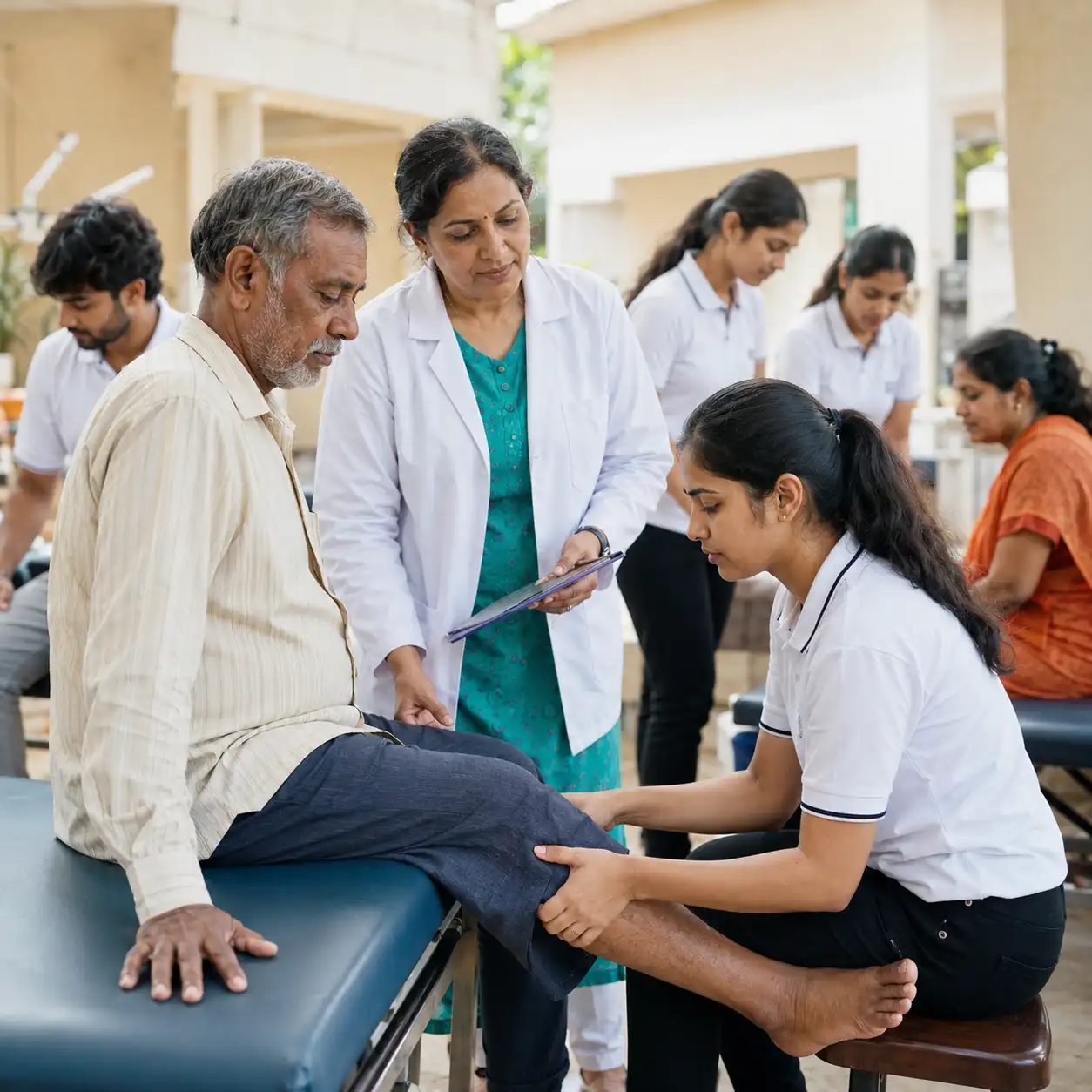
Students are introduced to a structured clinical approach that moves from history taking and examinationtomovement analysis, functional assessment and treatment planning. Learning addresses spinal disorders, osteoarthritis, fractures, tendon and soft-tissue injuries, and common shoulder, hip, knee and ankle conditions, along with sports injuries and post-operative rehabilitation and many more. Therapeutic exercise, strengthening, mobility and flexibility training, movement re-education, gait training, manual therapy approaches andelectrotherapy modalities form a part of the clinical skill set here.

Department Facilities
Dedicated areas for assessment, treatment and therapeutic exercise support practical instruction in
musculoskeletal physiotherapy. Treatment couches, assessment instruments, mobility-training resources andrehabilitation equipment provide opportunities to observe, practise and refine clinical techniques.
Student Learning & Clinical Exposure
Through demonstrations, case-based discussions and supervised clinical exposure, we train our students tolinkimpairments with functional goals and appropriate rehabilitation strategies. Emphasis is placed on clinical
documentation, patient communication and professional decision-making, preparing students for variedhospital, rehabilitation, private practice, sports and occupational health environments
Departmental Focus
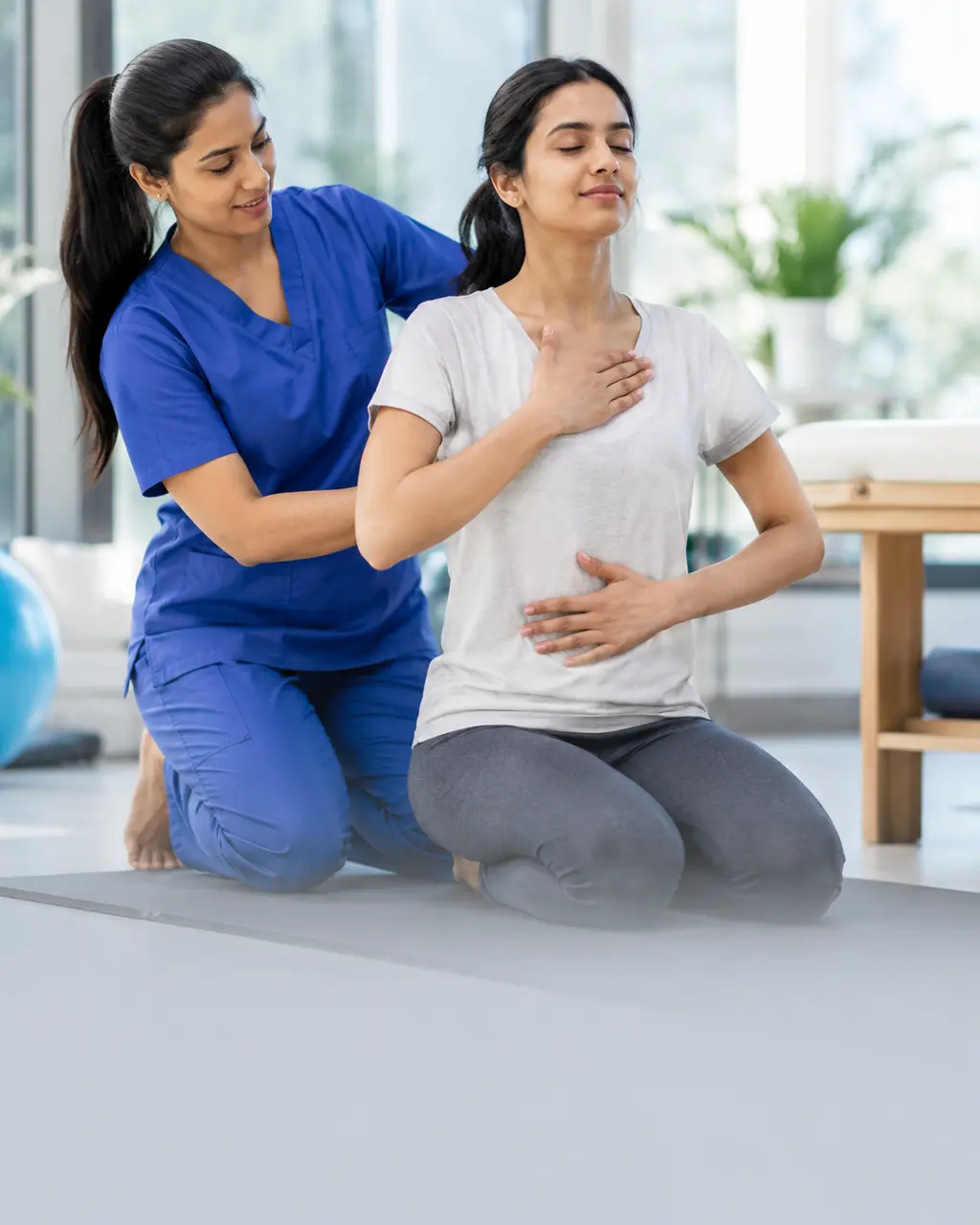
The department follows a function-oriented and holistic approach, looking beyond pain or isolated impairment to consider movement, activity, participation and the individual’s everyday goals. The objective is to developconfident clinicians who can help people return to meaningful movement and greater independence.
Neurological Physiotherapy
Department Overview
Neurological physiotherapy requires clinicians to understand not only how the nervous systemis affected, but also how those changes influence a person’s ability to move, communicate and participate. The department therefore combines neuroanatomy, neurophysiology, motor control, motor learning and functional rehabilitationwithin a person-centred learning environment.

Academic & Clinical Focus
Rather than approaching neurological conditions through a single impairment, students examine motor and sensory function, tone, strength, coordination, posture, balance, gait, transfers and activities of daily living as interconnected components of function. Clinical learning includes stroke, traumatic brain injury, spinal cord injury, Parkinsonian disorders, multiple sclerosis, cerebral palsy, peripheral nerve and neuromuscular conditions, vestibular dysfunction and neurological or neurosurgical rehabilitation and other various conditions.Positioning, task-specific practice, motor relearning, transfer training, balance work, gait rehabilitation and functional strengthening etc are explored as rehabilitation strategies here.
Department Facilities
The department provides spaces and resources for neurological assessment and treatment, together with balance and mobility-training facilities, gait and balance training equipmenst, therapeutic exercise resources and functional training aids. These settings support practical demonstrations and repeated skill development.
Student Learning & Clinical Exposure
Students are encouraged to connect neurological examination findings with real-life activity and participation. Practical sessions, case discussions and supervised clinical exposure help us train our students in goal setting, treatment planning, outcome measurement, documentation and caregiver education, while interdisciplinary interaction strengthens their understanding of rehabilitation as a collaborative process.
Departmental Focus
A holistic approach guides the department’s perspective on neurological rehabilitation. Mobility is considered alongside cognition, communication, confidence, environment, family support and independence so that rehabilitation remains meaningful to the individual.
Cardiovascular & Pulmonary Physiotherapy
Department Overview
The Department of Cardiovascular & Pulmonary Physiotherapy centres on the relationship between physiological capacity and functional activity. Its academic programme introduces students to cardiopulmonary assessment, clinical monitoring, exercise prescription and rehabilitation across acute, post-operative, critical-care, rehabilitation and community and out patient settings.
Academic & Clinical Focus
Learning begins with the ability to observe and interpret cardiopulmonary responses. Students study breathing pattern, respiratory rate, heart rate, blood pressure, oxygen saturation, chest movement, exercise tolerance and functional capacity, then apply these observations to conditions such as chronic respiratory disease, asthma, COPD, respiratory infections, cardiac disorders, post-operative recovery, deconditioning and critical illness. Breathing exercises, airway-clearance techniques where indicated, positioning, early mobilisation, functional training, strengthening and graded aerobic conditioning are incorporated according to clinical requirements.
Department Facilities
Cardiopulmonary assessment and monitoring resources are supported by exercise and endurance-training equipments like threadmil,airway clearance devices,respiratory aids and mobility-training areas. The department uses these facilities to strengthen practical understanding of safe exercise and functional rehabilitation.
Student Learning & Clinical Exposure
Clinical safety remains a key part of student preparation. Our students are trained to monitor responses to activity, make appropriate exercise adjustments, recognise changes that warrant attention and communicate effectively with physicians, nurses and other members of the healthcare team. Patient education, documentation and progressive rehabilitation planning are also integrated into practical learning.
Departmental Focus
The department adopts a measured and progressive approach to rehabilitation, with attention to breathing, exercise tolerance, mobility and return to functional activity. Students learn to view physiological improvement as a pathway towards better participation and quality of life.
Sports Physiotherapy
Department Overview
Sports physiotherapy is closely connected with movement, performance and the demands of physical activity. The department takes this perspective into teaching by combining injury management with biomechanics, conditioning, movement analysis and sport-specific rehabilitation and prevention of sports injury.
Academic & Clinical Focus
Students learn to look at an injury in the context in which it occurred. History taking, injury-mechanism analysis, range of motion, strength, flexibility, balance, proprioception, coordination and functional testing form the basis of assessment. Learning covers strains, sprains, ligament injuries, tendinopathies, overuse problems, running-related conditions and shoulder, knee and ankle injuries, including post-operative rehabilitation and other overuse injuries. Progressive strengthening, neuromuscular training, agility, functional drills and graded return-to-sport strategies are emphasised particularly here.
Department Facilities
Exercise and conditioning spaces, functional and agility-training resources, balance and proprioception training equipments, assessment tools and therapeutic equipments provide a practical setting for sports rehabilitation.
Outdoor sports courts and fields within the campus provide students with opportunities for observation, on-field assessment practice and practical training in sports injury management. These facilities support movement analysis as well as progressive reconditioning.
Student Learning & Clinical Exposure
Case discussions and supervised exposure allow students to work through the stages of injury management rather than viewing rehabilitation as a collection of isolated exercises. Students will also receive training in on-field assessment and injury management, helping them develop practical skills in assessing sports-related injuries and responding appropriately during sporting activities. We train our students to consider injury prevention, physical capacity, functional testing, rehabilitation progression and the demands of the activity or sport to which an individual intends to return.
Departmental Focus
The department follows the rehabilitation journey from injury to readiness. Its emphasis is on restoring capacity, building confidence and supporting safe participation in sport and physical activity.
Paediatric Physiotherapy
About the Department
Every child develops at a different pace, and paediatric physiotherapy must respond to that individuality. The department focuses on the developing child rather than the diagnosis alone, combining knowledge of growth and motor development with child-centred rehabilitation and family participation.
Academic & Clinical Focus
Students study normal motor development and developmental milestones before applying this knowledge to assessment of posture, movement, muscle performance, balance, coordination, gait, mobility and functional skills. Clinical learning includes cerebral palsy, developmental delay, neurodevelopmental conditions, neuromuscular disorders, muscular dystrophies, congenital conditions and paediatric neurological and orthopaedic disorders. Developmental stimulation, therapeutic exercise, positioning, strengthening, mobility and gait training, functional practice and play-based therapy are introduced as age-appropriate approaches.
Department Facilities
Child-friendly assessment and treatment areas, developmental assessment resources, play-based therapy materials, mobility and gait-training facilities and suitable therapeutic equipment support practical learning. The environment is designed to encourage engagement while developing professional handling and assessment skills.
Student Learning & Clinical Exposure
Students learn to observe movement in relation to the child’s developmental stage, abilities, surroundings and family context. Practical learning and supervised exposure help us train our students in therapeutic handling, exercise prescription, caregiver education and functional goal setting, with family-centred and multidisciplinary care as important components.
Departmental Focus
The department takes a holistic, developmental and participation-based view of paediatric rehabilitation. The emphasis is on helping children build useful movement skills and take part more confidently in play, learning, self-care and daily activities.
Geriatric Physiotherapy
Department Overview
Ageing brings changes in strength, balance, endurance, mobility and confidence, often alongside other health conditions. The Department of Geriatric Physiotherapy addresses these combined needs and prepares students to support safe function, independence and active ageing.
Academic & Clinical Focus
Assessment extends from physical capacity to everyday performance. Students examine gait, balance, strength, range of motion, endurance, functional mobility, exercise tolerance, activities of daily living and fall risk, while clinical learning considers age-related weakness and deconditioning, osteoarthritis, falls, gait disorders, neurological disability, cardiopulmonary limitations, post-operative recovery and joint-replacement rehabilitation. Strengthening, balance training, gait re-education, flexibility, endurance work, functional practice and fall-prevention strategies are included.
Department Facilities
Functional assessment areas and resources for gait, balance, therapeutic exercise, mobility and transfer training provide a practical setting for developing rehabilitation skills. Assessment tools support systematic evaluation of safety and functional performance.
Student Learning & Clinical Exposure
Students are encouraged to see the person behind the impairment and to recognize the importance of dignity, confidence, routine and social participation. We train our students through practical and clinical learning in communication, exercise prescription, functional rehabilitation and caregiver education, while fostering interdisciplinary practice.
Departmental Focus
The department uses a holistic approach to healthy ageing, bringing physical function together with independence, confidence and participation. Its goal is to help reduce avoidable functional decline while supporting a safe and active lifestyle.
Women's Health & Obstetric Physiotherapy
Department Overview
Women’s health physiotherapy spans important changes in the body across different stages of life. Within pregnancy, childbirth and the postpartum period, the department develops an understanding of physical, biomechanical and functional changes and the role physiotherapy plays in safe recovery and self-management.
Academic & Clinical Focus
Students explore pregnancy-related musculoskeletal discomfort, low back and pelvic girdle pain, postural changes and other pregnancy-related issues. The department also addresses common women’s health conditions such as urinary incontinence, pelvic-floor dysfunction, diastasis recti, pelvic pain and other musculoskeletal and functional concerns associated with pregnancy and the postpartum period.
Students will learn prenatal and antenatal exercise, breathing and relaxation, preparation for childbirth, postpartum rehabilitation, abdominal rehabilitation and graded return to activity. Antenatal management includes posture and movement education, mobility, strengthening, flexibility, breathing, relaxation and pelvic-floor exercise, while postnatal rehabilitation addresses abdominal and pelvic-floor function, posture, strength, mobility and gradual return to activity.
The department also introduces students to physiotherapy considerations related to lactation and breastfeeding, including appropriate education, positioning and exercise guidance during the lactation period.
Department Facilities
Includes women’s health assessment and treatment areas, exercise and rehabilitation spaces, patient-education resources and appropriate assessment and therapeutic equipments that support practical teaching. The learning environment emphasises on professionalism, privacy and respectful patient interaction.
Student Learning & Clinical Exposure
Students learn to conduct assessment, provide exercise and rehabilitation guidance, and communicate in ways that respect privacy, dignity, informed consent and individual preferences. Practical and clinical learning strengthens both technical and patient-education skills.
Departmental Focus
The department follows an individualised approach, recognizing that physical recovery is connected with comfort, confidence, education, daily function and personal goals. It supports women with evidence-informed physiotherapy across pregnancy and recovery.
Community Physiotherapy & Rehabilitation
Department Overview
Physiotherapy becomes especially meaningful when it reaches people in the settings where they actually live their lives. The Department of Community Physiotherapy & Rehabilitation extends learning into homes, schools, workplaces and community environments, with emphasis on prevention, health promotion, disability management and participation.
Academic & Clinical Focus
Community-based practice asks students to look beyond the diagnosis. They are introduced to functional and disability assessment, mobility and fall-risk evaluation, ergonomic assessment, health education and community rehabilitation planning. Areas of learning include home-based rehabilitation, disability prevention, geriatric rehabilitation, school health, workplace ergonomics, physical-activity promotion, fall prevention, health screening and awareness programmes. Rehabilitation strategies include therapeutic exercise, mobility training, caregiver education, posture correction, ergonomic advice, environmental modification and appropriate assistive devices.
Department Facilities
Resources for functional assessment, mobility training, health education, ergonomic assessment and assistive-devices demonstration that support practical learning related to everyday environments. These facilities help students to translate clinical principles into practical community-based solutions.
Student Learning & Clinical Exposure
Students gain an appreciation of how accessibility, family support, occupation, environment and social context influence rehabilitation outcomes. As part of their community-based learning, students will have opportunities to visit Primary Health Care Centres (PHCs), participate in extension services, conduct community surveys and take part in community camps and outreach programmes. These experiences help students understand community health needs, identify rehabilitation requirements and apply physiotherapy principles in real-world settings. We train our students through practical and community exposure in communication, teamwork, community assessment, programme planning and documentation, with collaboration across healthcare, education and community settings.
Departmental Focus
The department takes a holistic, people-centred view of rehabilitation by considering the individuals together with family, environment and community. It focuses on prevention, accessibility, independence and meaningful participation in everyday life.