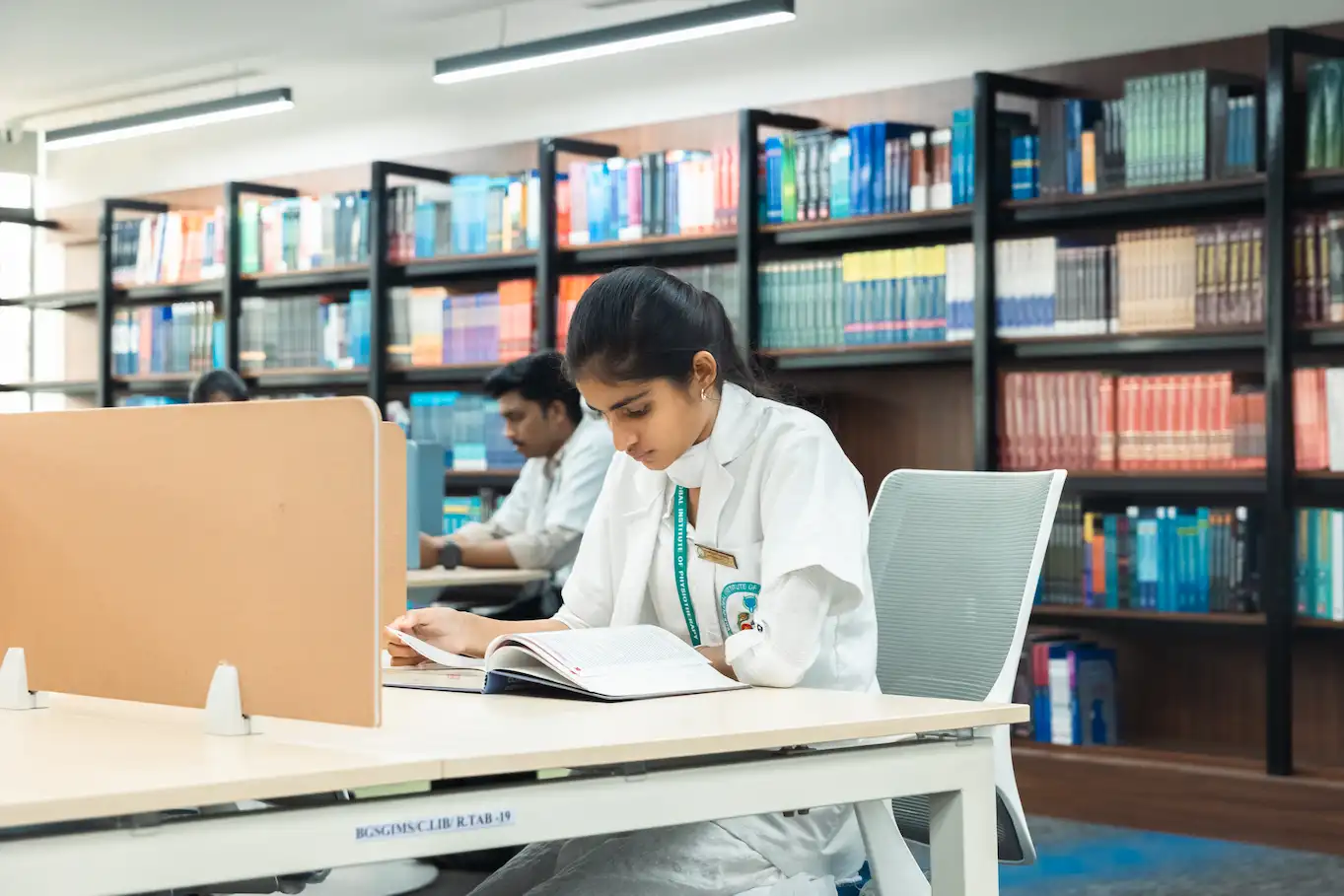
Teaching at BGS GIPT extends beyond the lecture hall. The curriculum combines theory, hands-on lab work, supervised clinical practice, research and professional development.
Teaching methods
Lectures
faculty-led sessions in air-conditioned theatres with audio-visual aids and small class sizes.
Practical and laboratory sessions
hands-on practice in electrotherapy and exercise-therapy labs before treating real patients.
Clinical training
supervised postings begin in the pre-final years and intensify through the final year and internship.
Case presentations and seminars
students present assessments, review literature and plan rehabilitation programmes.
Community rehabilitation camps
outreach and Community-Based Rehabilitation (CBR) build public health exposure.
Skill labs and workshops
manual therapy, taping, electrotherapy and assessment techniques.
Problem-Based Learning (PBL)
case-based discussions modelled on real clinical situations.
Research participation
students join faculty research, present at conferences and publish in indexed journals.
Clinical training model
Students observe, then assist, then treat under supervision, and finally work independently. Caseloads cover musculoskeletal, neurological, cardiorespiratory, paediatric and geriatric conditions, including postings at Gleneagles BGS Hospital.
Internship
After the final BPT examinations, students complete a compulsory six-month rotational internship across all clinical specialties and community postings before independent practice or MPT specialisation.
Research and facilities
Access to the BGS GIMS Research Institute for clinical and translational research.
HELINET digital library access to international journals and databases.
Statistical analysis support for student and faculty research projects.
Ethics committee clearance support for research involving human subjects.